

What Is Bitcoin? The Birth of Digital Gold and Technological Innovation
Today, Bitcoin is being listed as an asset on the balance sheets of major publicly traded companies and is fundamentally transforming the way we perceive value, trust, and ownership. Understanding Bitcoin is no longer an option but a necessity for comprehending the rapidly evolving Web3 economy and staying ahead of the curve.
1. Definition of Bitcoin (BTC): A New Decentralized Currency
Bitcoin is a decentralized digital currency designed to enable direct peer-to-peer transactions over the internet. The key difference from traditional financial systems lies in the presence or absence of a “central authority.”
- P2P (Peer-to-Peer) Transactions: Users can send value directly to anywhere in the world without intermediaries such as banks.
- Decentralized Network: Unlike fiat currencies managed by central banks, Bitcoin is operated by tens of thousands of computers (nodes) distributed worldwide.
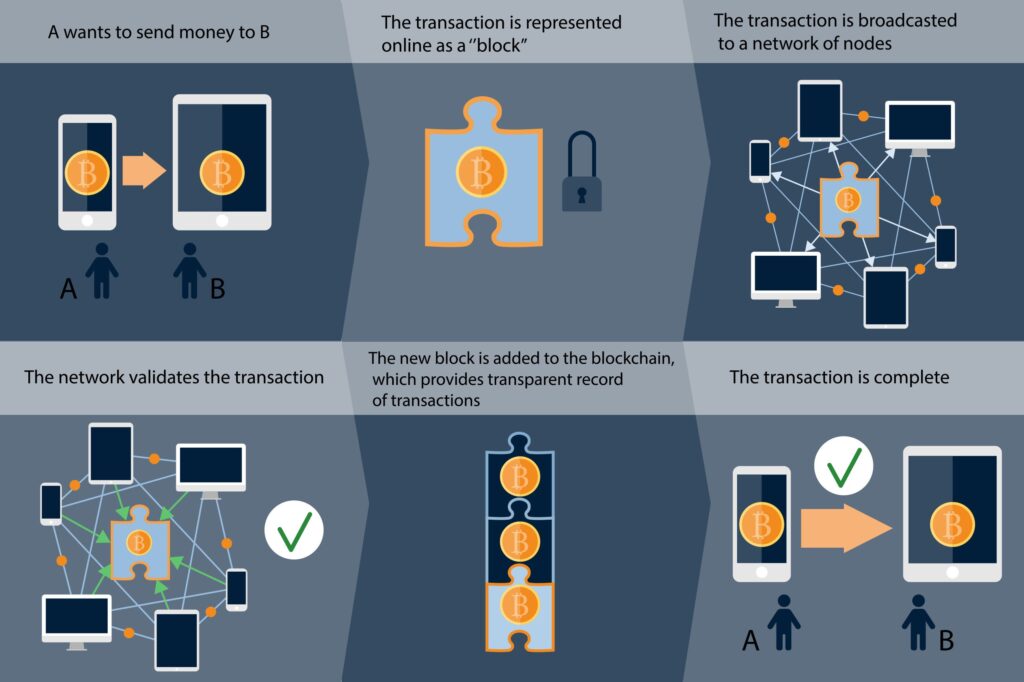
- Public Ledger (Blockchain): All transaction records are transparently recorded in a digital ledger called the blockchain, and anyone can verify them in real time.
2. The History of Bitcoin: Satoshi Nakamoto and the Genesis Block
Bitcoin was born against the backdrop of the 2008 global financial crisis.
- The Mysterious Founder: In 2008, a white paper titled “Bitcoin: A Peer-to-Peer Electronic Cash System” was published under the pseudonym Satoshi Nakamoto. His true identity remains shrouded in mystery to this day, adding to Bitcoin’s mystique and independence.
- Resistance to the System: The first block (the Genesis Block), created in January 2009, contained news headlines criticizing the bank bailouts of the time. This suggests that Bitcoin was created as an alternative to the centralized, debt-based financial system.
3. How Bitcoin Works: A Fusion of Technology and Economics
Bitcoin operates through an exquisite balance of cryptography, computer science, and economic incentives.
1) Blockchain Technology
All transactions are grouped into “blocks,” and these blocks are cryptographically linked to the previous block to form a “chain.” Since nodes around the world hold identical copies of the ledger, tampering with past records would require attacking the entire network simultaneously, making the system highly secure.
2) Mining and Proof of Work (PoW)
The Bitcoin network undergoes a process called ‘mining’ to reach consensus on which transactions are valid.
- Miners: They compete to solve complex mathematical puzzles using specialized computers.
- The Core of Security: Since solving these puzzles requires enormous computational power, attacking the network is extremely difficult and costly.
- New Issuance: Miners who solve the puzzle earn the right to add a new block to the blockchain and receive newly issued Bitcoin as a reward.
4. Four Unique Features of Bitcoin
Bitcoin’s value stems from the following structural characteristics.
- Limited Supply (Scarcity): The total supply of Bitcoin is fixed at 21 million. This “hard cap” is a significant advantage that contrasts with fiat currencies, whose value erodes due to inflation.
- Censorship Resistance: No single government or institution can arbitrarily freeze or block an individual’s transactions. This is an innovative feature that returns financial sovereignty to the user.
- Transparency: All transaction records are permanently recorded on the blockchain and can be tracked by anyone, which enhances the accountability of the financial system.
- Decentralized Trust: It is a system that relies on mathematical code and network consensus, rather than on trust in specific individuals or institutions.
5. Uses of Bitcoin: Utility Beyond Simple Investment
Over time, Bitcoin has evolved beyond a mere experiment to serve a variety of purposes.
- Store of Value (Digital Gold): Thanks to its scarcity and security, many investors use it as a means of preserving wealth against inflation.
- Borderless Money Transfers: Funds can be sent worldwide faster and more cheaply than through traditional banking systems, without any border restrictions.
- Support for the Financially Underserved: It enables people without bank accounts to participate in the global financial system as long as they have a smartphone and internet access.
- Institutional-Grade Asset: As major asset management firms and publicly traded companies adopt Bitcoin as part of their portfolios, it is increasingly recognized as a mainstream asset.
6. The Implications of Price Increases and Practical Considerations
Bitcoin’s journey—from $0.30 in 2010 to recently surpassing $120,000—is an event that will go down in financial history. However, there are also points users should be mindful of.
- Market Volatility: Bitcoin prices are subject to sharp fluctuations depending on market conditions. While this can pose a risk for short-term use, it is often interpreted as part of the growth process in the long term.
- Scalability Challenges: The transaction processing speed per second may be slower than that of centralized systems (such as Visa). To address this, Layer 2 solutions like the “Lightning Network” are being developed.
- Regulatory Environment: Since regulatory approaches vary by country, relevant laws and regulations may impact the user experience.
Conclusion: The First Step Toward the Web3 Era
Today, Bitcoin has evolved beyond simply being a new form of money to become a technological infrastructure that ushers in an era of intermediary-free value transfer. As the digital economy matures, the value of security and decentralization will only grow.
Understanding the principles of Bitcoin goes beyond simply gathering investment information; it is a preview of the financial systems of the future. Keep an eye on the new economic landscape that Bitcoin will shape at the heart of the Web3 era.
[Author’s Note] This post is intended to provide information about Bitcoin and does not constitute a recommendation to make any specific investment. When trading digital assets, you should always exercise your own careful judgment and conduct your own research.