
What is the Clarity Act?
Its official title is the Digital Asset Market Clarity Act of 2025. As the name suggests, it is a law designed to establish clear legal standards for the digital asset market.
Until now, the United States has lacked explicit legislation regarding virtual assets. Since there were no clear criteria to determine whether a coin is a “security” or a “commodity,” the SEC (Securities and Exchange Commission) has been targeting companies like Coinbase and Ripple through ex post facto lawsuits. In essence, there were penalties without rules.
The core of the Clarity Act is to resolve this uncertainty through legislation. It clearly delineates which agency regulates which type of coin.

Where are we at right now?
*July 2025—Passed by the U.S. House of Representatives (294–134)

*May 14, 2026—Passed by the Senate Banking Committee (15–9)

*June 2026—Senate floor vote—effectively the biggest hurdle

*July 4, 2026 (expected)—House of Representatives re-vote

*Mid-August 2026 (expected)—President Trump signs into law
✅ If it passes the Senate floor vote in June, the rest is essentially a formality.
Conversely, if it gets stalled here, the entire schedule could be pushed back until the fall or later.
Why Is a June Vote Unlikely?
The U.S. Senate operates under the “60-vote rule.” Under this system, a vote can only be held if 60 out of 100 senators agree. If the required 60 votes are not secured, a single opposing senator can launch a “filibuster” by speaking continuously to block the bill indefinitely.
Currently, Republicans hold approximately 53 seats in the Senate. Even if every supporter of the Clarity Act votes in favor, they would still fall 7 votes short of the 60-vote threshold. At least 7 Democratic senators must join them for a floor vote to take place.
Currently, the Polymarket prediction market puts the probability of the Clarity Act passing by 2026 at 73%.
6 Reasons Why the Figure Still Comes Out to 73%
1. It has already passed the House of Representatives with bipartisan support
The vote was 294 to 134, representing a 73% approval rate. A majority of Democratic lawmakers also voted in favor. This is a strong signal that cryptocurrency legislation has moved beyond ideology and entered the realm of consensus.
2. Some Democrats on the Senate Banking Committee also voted in favor
The vote was 15 to 9. This result shows that Democratic lawmakers, not just Republicans, cast votes in favor. This is a key leading indicator for gauging the likelihood of securing seven votes in the full Senate.
3. The Trump administration is directly and strongly pushing for it
Trump pledged during his presidential campaign to “make the U.S. the capital of cryptocurrency.” Since taking office, he has issued several related executive orders, and the White House has publicly set a goal of passing the bill before July 4th, Independence Day.
4. Corporate exodus is creating political pressure
Due to a regulatory vacuum, U.S. cryptocurrency companies have been relocating to Dubai, Singapore, and Hong Kong. This simultaneous outflow of capital and tax revenue is creating a sense of crisis across the political spectrum.
5. There are crypto-friendly lawmakers within the Democratic Party
Among Democratic senators from financial and IT hubs such as New York and California, there are figures who are supportive of cryptocurrency. Names like Schumer, Gillibrand, and Gallego are being mentioned, and it is considered realistic that seven such senators could be secured.
6. The market is already betting on passage
The 73% figure on Polymarket represents actual capital at stake, not just public opinion. The fact that participants are betting money on passage reflects the market’s realistic assessment.
The Remaining 27%: Three Potential Obstacles
It’s not all optimism. If just one of the following three variables comes into play, the June vote could be pushed back to the fall.
1. Controversy Over the Trump Family’s Conflict of Interest
The Trump family is directly involved in the cryptocurrency business. Criticism that “the bill was designed to benefit the family business” could fuel backlash from Democratic lawmakers.
2. Anti-Money Laundering (AML) Regulatory Negotiations
Democrats are demanding stronger anti-money laundering provisions. If negotiations drag on or no agreement is reached, the vote schedule itself could be delayed.
3. The Scenario Where the Bill Is Overshadowed by Other Political Issues
Congressional schedules are subject to change at any time. If a single unexpected issue pushes the plenary session schedule back to the fall or year-end, the overall political climate could shift.
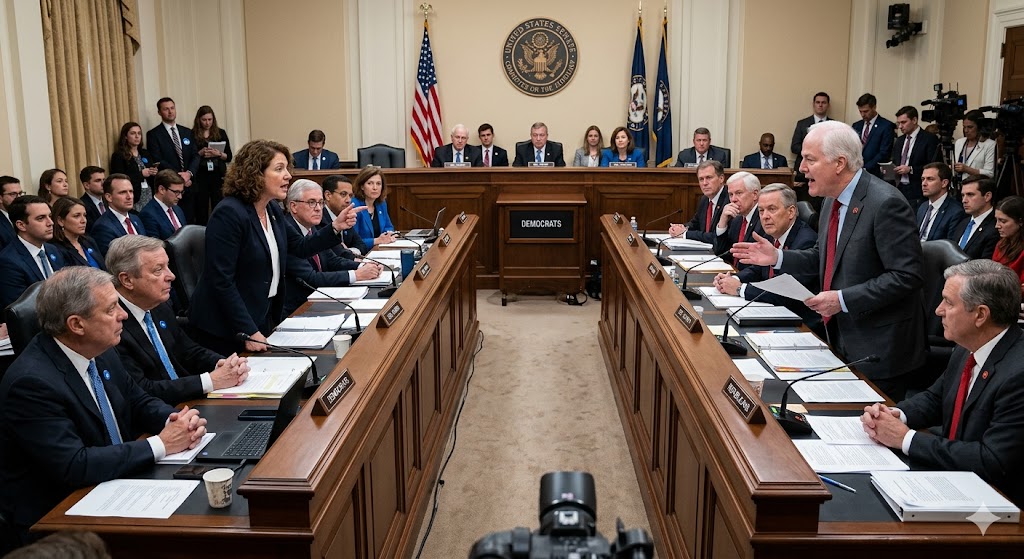
A Story the Media Rarely Covers—Pretending to Oppose It While Actually Wanting It Passed?
(The Paradox of Crypto Funds and the Democratic Party)

On the surface, it appears that the ruling and opposition parties are locked in a fierce battle, but a closer look behind the scenes reveals a completely different picture. If you trace the flow of political funds, it becomes clear why this bill is leaning toward a deal.
Key Issue: The Battle Over the ‘Ethics Clause’
The biggest obstacle blocking the Senate floor vote is not anti-money laundering measures or technical regulations. It is the ‘ethics clause.’
Prohibition on high-ranking public officials and their families owning or promoting digital assets
The Democratic Party is attempting to include provisions in the bill that directly target entities operated by President Trump’s family, such as “World Liberty Financial” and “Trump Meme Coin.” The stated rationale is to completely block channels through which foreign entities could secretly funnel funds to the president via cryptocurrency.
Democratic Party Position Demands the inclusion of specific language directly naming the Trump family. “We cannot support the bill unless it includes substantive provisions to prevent conflicts of interest.” | Republican Party and White House Position Rejects language targeting specific individuals. “We can accept it if it is a general provision that applies equally to all public officials.” |
Based on the headlines alone, it looks as if the negotiations are on the verge of breaking down. However, that may not actually be the case. The reason is explained in the following passage.
The Hidden Backgrounds of the Lawmakers Who Oppose It Most Vehemently
These are the hardline Democratic lawmakers who are pushing the ethics provisions the hardest. Yet many of them were elected after receiving massive campaign contributions from the crypto industry in the past.
| 🏛️ Senator Ruben Gallego (Democratic Party · Senate) Received approximately 15.1 billion won ($10 million) in support from a crypto super PAC He was elected in the 2024 election after receiving substantial financial backing from the crypto super PAC “FairShake.” He is currently a leading advocate for strict ethics provisions and is spearheading negotiations on the matter. |
| 🏛️ Rep. Adam Schiff (D-CA) Approx. 15.1 billion won in support from the crypto community + contributions from Ripple executives When including personal contributions from Ripple executives, he maintains close financial ties with the crypto industry. |
| 🏛️ Senator Kirsten Gillibrand (Democrat · Senate) Ongoing contributions from Coinbase and Ripple officials As a senator who has consistently received donations from Coinbase and Ripple officials, she has, in effect, maintained a long-standing financial relationship with the virtual asset industry. |
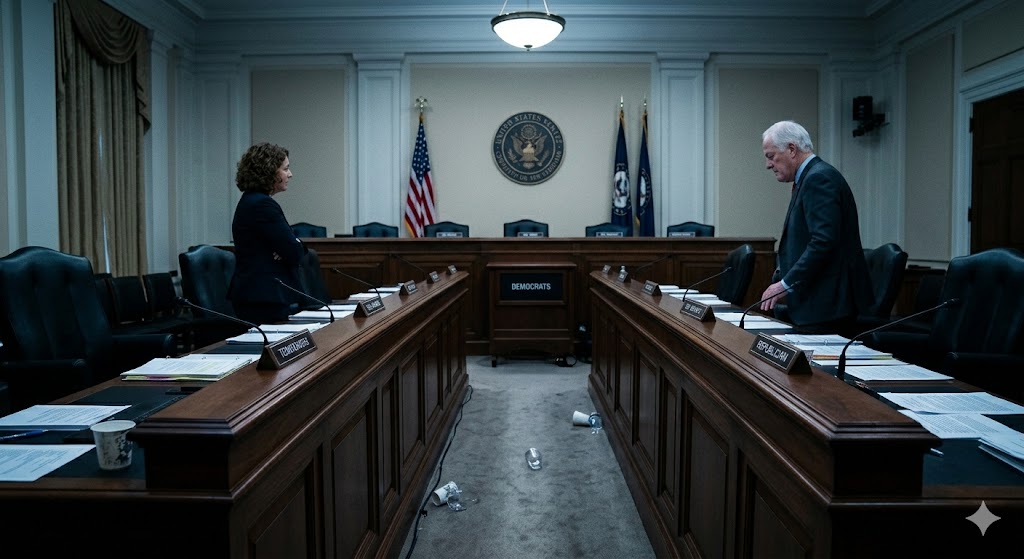
Why Are They Leading the Opposition?
Why do they act as if they are the strongest opponents even after receiving crypto funding? Herein lies the paradox of politics.
Distrust of the crypto industry is growing among U.S. voters. Some surveys show that while trust in traditional banks stands at 47%, trust in the crypto industry hovers at just 17%.
Lawmakers who have received crypto donations find themselves in a situation where they must prove to voters that “I am not their agent.” This is why some interpret their strong push for ethics provisions before the vote as a process of building that justification—in other words, political positioning.
Ultimately, the crux of this situation is that, given the key players at the negotiating table are closely tied to crypto funding, it is highly likely they will reach a settlement by finding an effective compromise without directly targeting Trump.
The real deadline is August.
It is well known that the White House has set a goal of “signing the bill by July 4th, Independence Day.” However, there is an even more important deadline.
⏰ Early August — U.S. Congress Summer Recess
The U.S. Congress goes into recess every year in early August. When this coincides with the political climate leading up to the November midterm elections, any bill that has not passed a floor vote by August will effectively be pushed back to next year. Industry estimates suggest that if this opportunity is missed, the actual passage of the Clarity Act could be delayed until after 2030
★ While July 4 is a symbolic target, the real deadline for negotiations is before the August congressional recess. This timeline is putting pressure on all parties involved to reach a deal.
📌 The market is already quietly reflecting this. The fact that crypto-related stocks, which had been undergoing a temporary correction following the markup’s passage, have entered a rebound trend can be seen as a signal that the market is anticipating a potential deal.
The Clarity Act’s true make-or-break moment is the Senate floor vote scheduled for June–July 2026.
While it may appear to be a standoff between the ruling and opposition parties on the surface, considering the financial backgrounds of the key negotiators and the August recess deadline, the situation is tilting toward a resolution. If a compromise emerges in which the Democrats secure moral high ground on the ethics provisions and the Republicans avoid directly targeting Trump, the bill is highly likely to pass the vote.
There are two key points to watch right now: the direction of negotiations on the wording of the ethics provisions, and whether the schedule for the June–July plenary session is finalized. The fate of this bill hinges entirely on how these two factors play out.