
From Eric Trump’s sudden departure, to the Wall Street Journal’s report alleging partnership irregularities, to Congress’s regulatory crackdown, and the exposure of the project’s internal token structure—the Trump family’s DeFi experiment is crumbling from all sides.
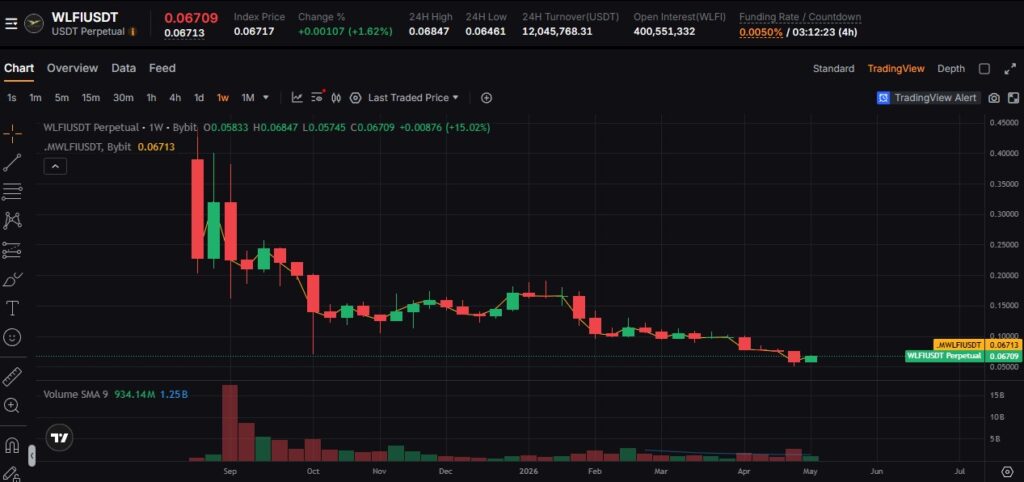
Eric Trump’s name was quietly removed from the board of a key affiliate; The Wall Street Journal exposed ties to entities subject to U.S. government sanctions; and in the Senate, an ethics provision targeting the Trump family has held the entire stablecoin bill hostage. To make matters worse, the vote to unlock 62 billion WLFI tokens has shaken the very foundation of the project’s identity as a decentralized initiative. Let’s examine each of these issues one by one.
As an investor, you’ve probably asked yourself at least once, “It’s President Trump’s coin, so it can’t fail.” But the current situation surrounding World Liberty Financial (WLFI) is directly challenging that belief. Behind the halo of being a DeFi project run by the family of a sitting president, four serious cracks have opened simultaneously in just one week. World Liberty Financial is facing challenges that are shaking investor confidence.
Eric Trump quietly disappears from
Alt5 Sigma’s leadership roster
The incident that sparked this series of events unfolded more quietly than one might expect. On May 1, Mike Dudas, founder of the cryptocurrency news outlet The Block, noticed something odd: Eric Trump’s name had been completely removed from the leadership page of Alt5 Sigma, a key partner of WLFI.
Eric Trump was appointed as an official advisor and board observer for Alt5 Sigma. His name was listed on the leadership page until last March, but he was removed from the list in the first week of May without any official announcement or explanation.
Eric Trump was appointed as an official advisor and board observer for Alt5 Sigma. His name was listed on the leadership page until last March, but he was removed from the list in the first week of May without any official announcement or explanation.
Therefore, this quiet departure carries significance beyond a mere personnel change. This is why Dudas pointed it out using the strong term “scam.” Removing a name without following official procedures or providing any explanation to investors closely resembles a pattern that typically precedes the collapse of a project in the DeFi ecosystem.
“Transparency is the lifeblood of DeFi projects. If a key figure disappears without offering any official explanation, the market has no choice but to assume the worst-case scenario.”
Of course, it has not yet been officially confirmed whether Eric Trump withdrew his funds or was removed from the list for other reasons. However, the very fact that this has not been confirmed is already creating significant uncertainty in the market.
WSJ Exclusive — The Truth Behind a Partnership
Linked to a Criminal Organization Subject to U.S. Sanctions
On April 29, before the Eric Trump controversy had even died down, The Wall Street Journal dropped an even bigger bombshell. The report revealed that “AB,” the cryptocurrency venture firm announced by WLFI as an official partner, had ties to individuals who had previously been sanctioned by the U.S. Treasury Department..
Case Overview / Based on WSJ reporting
- WLFI Announces Official Partnership with Cryptocurrency Venture Firm ‘AB’
- Two Individuals Subject to U.S. Sanctions Involved in Blockchain-Themed Resort Construction Project Being Developed by AB
- These Individuals Are Suspected of Being Linked to the Prince Group, Designated by the U.S. Government as Asia’s Largest Criminal Organization
- WLFI’s Explanation: “We Were Unaware of the Blockchain Resort Project at the Time of the AB Contract”
- WLFI’s Additional Clarification: “It Was a Technical Partnership for USD 1, Not a Formal Partnership”
WLFI immediately moved to address the situation. Their official position is that their relationship with AB was merely a technical collaboration to enable the use of the stablecoin USD1 on the AB network, and that they had no knowledge of the blockchain resort project at the time the contract was signed.
However, this explanation raises further questions. It is difficult to accept the claim that a financial project run by the family of a sitting U.S. president failed to verify in advance whether key executives of a partner company were subject to federal sanctions. If true, this implies that basic internal control systems were not functioning; if they were aware, it raises even more serious concerns.
“Regardless of the facts, the mere report that a project linked to the sitting president’s family was involved with a target of federal sanctions has effectively provided regulators with a strong justification for action. The fact alone that a project bearing the sitting president’s family name was connected to a U.S. government sanction target is sufficient grounds for regulators to take action.”
In fact, following this report, some members of the U.S. Congress have begun to publicly mention the need for an investigation into WLFI. The WSJ’s exposé may not be merely a media scandal, but a warning sign that legal and regulatory risks are materializing.
The CLARITY Bill Has Hit a Snag — WLFI Risks Have Spread to Congress
Immediately after the two scandals broke, the fallout spread to Congress faster than expected. On April 28, Republican Senator Tom Tillis officially expressed his opposition to the CLARITY Act, a key piece of legislation for regulating U.S. stablecoins. He had only one condition: he would not sign the bill unless it included an ethics provision prohibiting federal officials, including President Trump, from issuing or endorsing digital assets.
Given that the provision demanded by Senator Tillis effectively targets WLFI, the Trump meme coin (TRUMP), and the Melania coin (MELANIA) as a whole, this is not merely a matter of legislative technicality. A situation has arisen in which the cryptocurrency regulation bill is in direct conflict with the Trump family’s business interests.
Why the Political Landscape Is Becoming More Complex
Senator Tillis is in a “lame duck” period as he prepares to leave office. This means he has virtually no incentive to bow to party pressure or cater to the White House. If he were to align with the Democratic moderates, the Republican Party’s goal of passing legislation before the midterm elections would inevitably face serious setbacks.
Ironically, President Trump himself has publicly declared since the beginning of his term that he would make the U.S. the “capital of cryptocurrency.” However, a paradoxical situation is unfolding in which his family’s pursuit of a cryptocurrency business is actually hindering the passage of stablecoin regulatory legislation across the entire U.S. From the perspective of WLFI, which dreams of entering the mainstream financial system, this is one of the most unfavorable scenarios.
The Truth Behind the Unlocking of 62 Billion Tokens and AI Financial’s 90% Stock Plunge
While external shocks continued, news emerged from within WLFI that the market found hard to welcome. On April 30, World Liberty Financial held a governance vote on the unlocking of a total of 62 billion WLFI tokens (worth approximately $3.7 billion at the time), and the proposal passed with 99.5% approval.
On the surface, this appears to be overwhelming support. However, a closer look at the actual structure of the vote tells a different story. Just four of the top WLFI token-holding addresses held approximately 40% of the total voting power, and suspicions immediately arose that these addresses were linked to key insiders, including the Trump family.
Key Data on the Unlock Structure
- Total amount subject to unlock: 62 billion WLFI (approximately $3.7 billion)
- Governance vote approval rate: 99.5% — The top 4 addresses exercised approximately 40% of the voting rights
- Actual distribution timeline: Begins 2 years after the vote date and is unlocked sequentially over a maximum of 4 years
- Market Reaction: Immediately after the unlock issue came to light, the WLFI token briefly dipped below the $0.06 mark
The primary raison d’être of decentralized finance, or DeFi, is that no single entity can control the system. However, if four addresses—presumed to be insiders—control 40% of the overall governance, this is no different from centralized finance that merely goes by the name of DeFi. Criticism is mounting within the community that the philosophy of decentralization WLFI has championed was, in reality, nothing more than a facade.
“A 99.5% approval rate may be evidence of a monopoly, not democracy. Who cast those votes is a more important question than the result itself.”
Adding to this, shocking news has emerged from AI Financial (formerly Alt5 Sigma), a Nasdaq-listed company directly linked to WLFI. On April 30, AI Financial announced it would acquire “BlockStreet,” a blockchain asset tokenization startup owned by its advisor Matthew Morgan, for $43 million. Purchasing a company owned by a corporate advisor for tens of millions of dollars under that advisor’s leadership is, by any standard, a classic case of a conflict of interest.
The market has spoken. Since announcing its pivot to the cryptocurrency business, AI Financial’s stock price has plummeted by nearly 90%. The fact that the publicly traded company most closely tied to the WLFI ecosystem has fallen into such a state raises serious questions about the overall soundness of the project.
So, how should investors view this?
None of the four issues we’ve examined so far are trivial, even when considered individually. However, the fact that they all erupted almost simultaneously is far more significant. This could be a sign that structural problems—rather than mere short-term setbacks—are coming to the surface.
The controversy surrounding Eric Trump’s departure is undermining confidence in the project’s leadership; the WSJ report is raising legal risks; the stalemate over the CLARITY bill is casting doubt on the project’s potential for mainstream adoption; and the exposure of the unlock mechanism’s flaws is shaking the medium- to long-term trajectory of the token’s price. It is a situation where pressure is being applied simultaneously from four different directions.
WLFI: Now is the time to take a deep breath and watch how things unfold, rather than rushing into things.
In the short term, the WLFI token is likely to face additional downward pressure due to a combination of unlocking pressure and declining confidence in its governance. In the medium term, the outcome of the CLARITY bill and the official response from U.S. regulators to the WSJ report will be the most critical variables.
Above all, the fundamental lesson of this situation is this: political backing does not eliminate risk. In fact, precisely because it bears the name of power, it may face even stronger regulatory headwinds. The name “World Liberty Financial” has begun to function not as a guarantee but as a risk factor.
If you currently hold a position, it is prudent to reduce your exposure. If you are considering entering the market, it is reasonable to wait and see how the four issues mentioned above are resolved before making a decision. With uncertainty piling up to this extent, there is no reason to rush.
In recent developments, World Liberty Financial has encountered significant scrutiny, highlighting the need for transparency and accountability in DeFi projects.
As the landscape continues to evolve, those involved with World Liberty Financial must remain vigilant and prepared for potential shifts in the market.
Overall, the trajectory of World Liberty Financial is intertwined with the evolving landscape of cryptocurrency regulations.